Colitis is one of the most common conditions that we see in dogs with digestive issues.
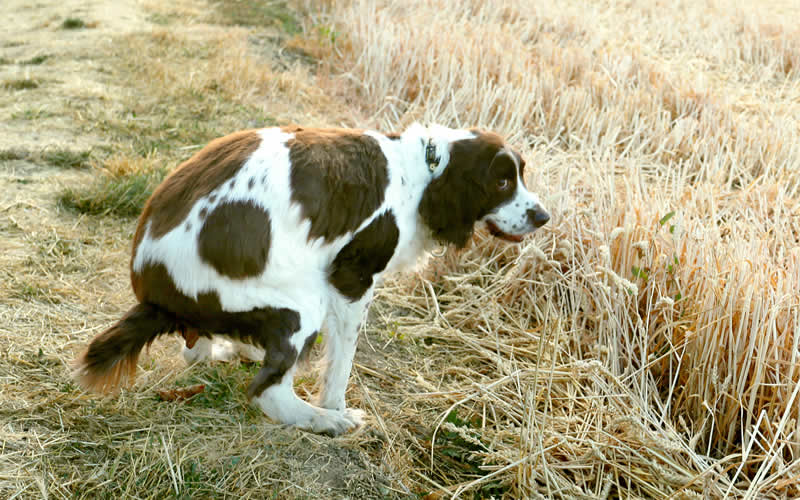
When you notice your dog straining to pass faeces and appearing uncomfortable and anxious, and the faeces are flecked with blood and mucus (as shown in the slightly graphic image of the Springer Spaniel – apologies) then we tend to diagnose colitis in your dog.
Some owners bring in samples of the faeces to the consultation, or others take photos and show them to me on their phones, but the flecked red blood and straining is the give away. Your dog is also usually well with no vomitting but the sight of blood is always a concern to owners.
As it is an inflammatory change in the colon which is the last section of the gut loops where water is resorbed; the thickened walls result in a feeling of constant fullness which is why your dog strains thinking that there is something to pass, but all they do is strain the blood vessels and prevent the proper water resorption from occurring which is why it has a ‘jelly-like’ coating with the flecked blood.
What causes colitis?
The main cause of colitis is stress! A little like inflammatory bowel disease in humans, the bowels in our dogs are very susceptible to changes in your dog’s routine causing stress – whether that be a change of food, visitors, visits to a kennel, vet or grooming parlour, they can end up with signs of colitis.
As it is an inflammatory change in the colon, allergic food reactions are also culprits in causing recurrent colitis. This can be to a number of allergens that your dog may eat, but remember that the main food allergens in dogs are beef, dairy, wheat, lamb, egg, chicken, soya, pork, corn, rabbit and fish – in that order.
Other allergic reactions can occur to medication that your dog may be given as happened with Baxter shown below.
Baxter is a highly sensitive boy who adores his owner and has suffered with such severe gut issues and pain from an animal protein intolerance, that he can only eat a 100% plant-based diet to resolve his gut pain.
With this sensitivity in his gut, comes an overall sensitivity to everything and any change or added medication he may be given. He went to be neutered and was sent home with an anti-inflammatory after the operation (Metacam). His owner contacted me as he was so concerned about flecks of fresh blood in Baxter’s faeces, and he worried that his gut issues may be returning.
I reassured him that he had all the signs of colitis and that he was not to change Baxter’s food – just feed a light meal of mashed sweet potato and cooked green beans to settle his stomach, and continue with his daily Solo-Vegetal.
Baxter did recover quickly and is back to his happy self, and his owner is now aware of any changes that may unsettle Baxter and to expect the odd outbreak of colitis in his sensitive Weimeraner!
Oslo is a dear little rescue with very dedicated owners who under my supervision, feeds her a 100% plant-based puppy diet. She loves her food and is doing so well, but her owners contacted me as a matter of urgency as they noticed flecks of blood in her faeces, but also in her urine and staining her beautiful white fur.
She was well and happy in herself, and again I reassured Oslo’s owners that she was possibly suffering from colitis due to coming into season for the first time – even that can be a stress in our dogs with all the hormone changes happening!
A natural high fibre plant-based diet for your dog is one of the best diets for their digestion and bowel movements.
If your dog suffers from runny stools, transitioning them to a fibrous plant-based diet is ideal. Fibre can help to solidify loose, watery stools because it absorbs water and adds bulk to stool. The increased fibre in plant-based food is also better for dogs with anal gland issues. The added bulk allows the dogs digestive tract to push the stool more efficiently through the anal glands, allowing them to be emptied more effectively, rarely causing blockages.
Consistent firm stools is one indicator of good bowel health which is why keeping an eye on your dog’s toileting is always important.
Less stinky poo’s
That’s right! A plant based diet will mean far less smelly poo’s which is a fantastic bonus!
A study by researchers at the University of Illinois looked at the digestibility of human-grade vegan dog foods compared with a commercial meat based option. They found that plant based diets resulted in the dogs producing lower phenol and indole concentrations in their poo. Interestingly, phenol and indole contribute to smelly poo, so it’s likely that switching your dog to a vegan diet will help minimise the stink!

A crazy experiment on Channel 5 TV proves that vegan dog poo has no smell as Alexis Conran and vet Arielle Griffiths sniff dog poo!
How surreal it felt to be featured in a programme on Channel 5 called Britain’s Dog Poo Scandal. We recorded the dog food bits in the series off our own TV if you missed seeing it (as the rest of the programme was just about dog poo!)
Hear more in the clip below. Just press play
Vegan dog poo is a lot less smelly – watch below
Why do some dogs eat their own poo?
Coprophagia is the name given for dogs who eat their own poo. There are a number of reasons for this behaviour.
1) Dogs have an innate ability to know when they may be lacking in nutrients. For example your dog may suffer from a Vitamin B12 deficiency which is obtained naturally from soil. Therefore eating their own poo (which may have soil around it) allows them to correct this deficiency naturally. Alternatively they may be attempting to restore some ‘good gut bacteria’ that can be found in stool.
If your dog is well, then please do not be alarmed. However if your dog is showing signs of changes such as increased thirst or lethargy, then please have them checked by your vet.
2) Coprophagia can also be a behavioural issue with some dogs attempting to ’hide the evidence’. Dogs have been taught from an early age that it is wrong to toilet indoors. Very obedient dogs will understand this to mean that pooing in the house is ‘wrong’ and will therefore try to conceal any evidence after the fact.
3) Wild dogs in a pack will have the more submissive members of the pack remove any evidence of them having been an area by eating the evidence before they move on for safety. This behaviour has carried on into some of our domestic dogs.
One way to try to stop this undesirable behaviour is to feed your dog some pineapple daily. Fresh pineapple is needed as it contains bromelain. The theory is that pineapple is very bitter or acid when passed, but it also contributes to the good gut bacteria. Our Solo Vegetal tins contain pineapple as one of their ingredients and may help improve this behaviour.

It is important to do some dietary elimination trials in your dog if they do suffer from regular bouts of colitis as shown with Mary the Boston Terrier below who transitioned to a 100% plant-based diet to resolve her issues.
Little Mary the Boston Terrier from Portsmouth was a rescue at 3 years old. She suffers from epilepsy, arthritis, colitis and had awful dandruff and was very underweight when her owners rescued her. She tried all diets with her and vegan home cooked worked the best for her. She’s now the perfect weight and her colitis and skin have improved vastly.

We dream the same dream, we want the same things
Rishi Sunak hiring vegan Meera Vadher as head of green policy and Just be Kind growing – dreams do come true!
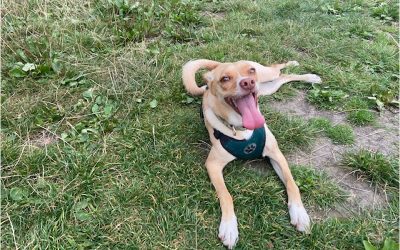
Canela loves Hownd and we have great news for her….
We have Hownd tinned food back in stock with extra nutritious ingredients for your dog!

Dr Arielle gives a passionate talk at London Vet Show!
Such positivity surrounding plant-based feeding of dogs for the first time at the London Vet Show!
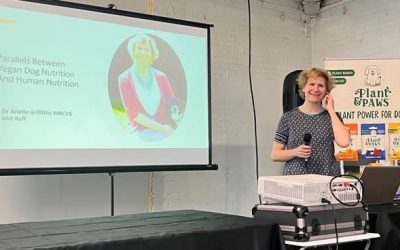
Vegan Vet talks at Vegfest
I listened to a talk given by the inspiring Prof Knight and I felt so privileged to be able to give a talk too and share my knowledge and experiences with like-minded people

Little Leo shocked his vets
What a little darling Leo the Pomeranian is! His story is a simple one that is echoed by all of us and spoken by his Dad
Jackson has lumps and bumps
What do those lumps mean in our dog and when do we know if a fatty lump is something to be worried about?
What is an Empath?
About 1 in 5 people is an empath with a higher amount of empaths noticed amongst the caring professions

VegFest Amazing Line-up!
We couldn’t be more excited about this year’s line-up for VegFest at London Olympia 12th and 13th November 2022
More published evidence by top vet nutritionist
Specialist Vet Nutritionist Dr Mike Davies has published yet further evidence that dogs on a vegan diet showed improvement in coat glossiness, dandruff, itchiness, anxiety……..
Family of 12 dogs transitioned from raw to vegan food
“Thanks to the Teleconsults with you specifically for Paddy, he is nothing short of a ‘miracle’!”
TV Presenter Alexis Conran Feeds His Own Dog Vegan Food
“Hi Arielle Lovely to hear from you. Gelmer is pretty much meat-free 80% of the time and this keeps him very happy”

Nora started life as a terrified rescue
“She runs around like a giddy kipper on her walks, seems so much better in her mood (happy and excitable), and her coat looks amazing!”